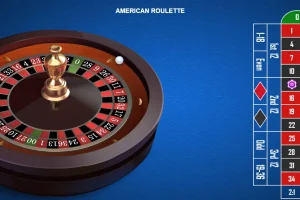
You know the classic image: the single spinning wheel, the bouncing ivory ball, the green felt layout. That’s American or European roulette, the undisputed champions of the casino floor. But what if I told you there’s a whole universe of roulette variations out there? Niche games with rules that twist the odds, change the pace, and offer a completely different flavor of excitement.
Let’s dive into a comparative analysis of three fascinating niche roulette styles: the elegant French Roulette, the speedy Mini Roulette, and the chaotic Multi-Wheel Roulette. Understanding their rules isn’t just trivia—it’s your key to finding the game that truly fits your style.
French Roulette: Where Elegance Meets Player-Friendly Rules
Think of French Roulette as European roulette’s more sophisticated cousin. At first glance, the table looks different—the layout is in French, sure—but the real magic is in two special rules that dramatically lower the house edge. Honestly, it’s a player’s best friend.
The Core Rules & Table Layout
The wheel is standard European: 37 pockets with a single zero. The bets are the same (straight, split, street, etc.). The big differences? The “La Partage” and “En Prison” rules. These apply only to even-money bets (like Red/Black or Odd/Even).
- La Partage (“The Divide”): If the ball lands on zero, you lose only half your even-money bet. The house takes that half, and you get the other half back. It’s a straightforward damage-limitation rule.
- En Prison (“In Prison”): Here’s where it gets interesting. If zero hits, your bet isn’t lost. It’s imprisoned for the next spin. On that next spin, if your bet wins, you get your original stake back—no extra profit. Lose, and the house takes it. It’s a second chance, a suspenseful reprieve.
These rules slash the house edge on even-money bets from 2.70% to a mere 1.35%. That’s a huge deal for strategic players.
Mini Roulette: The Compact, Fast-Paced Cousin
Imagine taking a standard roulette wheel and putting it on a serious diet. That’s Mini Roulette. It’s built for speed and simplicity, with a completely different scale that changes the math—and the feel—entirely.
A Smaller Wheel, Different Odds
The most jarring difference? The wheel has only 13 pockets: numbers 1 through 12, and a single zero. That’s it. This compact size means every number has a 1 in 13 chance of hitting, which fundamentally alters the payout structure.
| Bet Type | Standard European Payout | Mini Roulette Payout | Why the Difference? |
| Straight Up (Single Number) | 35:1 | 11:1 | With 13 pockets, 11:1 odds are actually “fair” for a 1/13 chance. |
| Red/Black (Even Money) | 1:1 | 1:1 | Same payout, but the zero’s presence (1/13) creates a higher house edge of ~7.69%. |
See, the house edge jumps to about 7.69% on most bets because of that single zero in a smaller pool. The trade-off? It’s incredibly fast. Rounds fly by, and the smaller number set can feel less intimidating for newcomers. It’s a fun, casual variant, but not necessarily a haven for odds-hunters.
Multi-Wheel Roulette: Controlled Chaos on a Grand Scale
Now, let’s flip the script. Instead of simplifying, Multi-Wheel Roulette amplifies. The core concept is simple, almost dizzying: you place a single bet, but it’s played across multiple virtual wheels simultaneously—often 2, 4, 6, or even 8 wheels.
Rules, Payouts, and the Thrill of Multipliers
You pick your number(s) and choose how many wheels to activate. Each wheel spins independently. Here’s the deal: your bet is multiplied by the number of wheels. If you bet $1 on a single number across 8 wheels, your total stake is $8. The potential payout? It’s a rollercoaster.
- If your number hits on none of the wheels, you lose the full $8.
- If it hits on one wheel, you win on that wheel (at standard 35:1 odds on a $1 bet, so $35) but lose on the other seven ($7). Your net win is $28.
- If, by some incredible stroke of luck, your number hits on multiple wheels, you win on each one. That’s the dream scenario—a win multiplier effect that can lead to monster payouts from a single bet.
The rules per wheel are standard European (single zero). The strategy, though, is all about managing volatility. It’s high-risk, high-reward, perfect for players who crave that heart-pounding, all-or-nothing sensation.
Side-by-Side: Choosing Your Niche Roulette Game
So, how do you pick? It’s not about which is “best,” but which suits your mood and goal. Here’s a quick, final comparison to help you decide.
- For the Strategic, Odds-Conscious Player: French Roulette is the clear winner. Those player-friendly rules are a gift. The lower house edge is a tangible, long-term advantage. It’s the thinker’s game.
- For Fast, Casual Fun: Mini Roulette is your pick. The rounds are quick, the numbers are few, and the simplicity is refreshing. Just go in knowing the odds are steeper—treat it as a lively diversion.
- For the Adrenaline Junkie & High-Volatility Fan: You’re a Multi-Wheel candidate. The potential for cascading wins on a single bet is unmatched. It’s less about slow strategy and more about embracing the beautiful chaos of multiple outcomes at once.
In the end, roulette isn’t a monolith. It’s a spectrum. From the protective elegance of French rules to the compact frenzy of Mini and the multiplied mayhem of Multi-Wheel, each niche variant offers a distinct lens through which to view that iconic spin. The real question becomes: what kind of excitement are you looking to craft today?