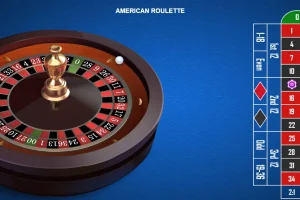
The spin of the roulette wheel is more than a game. It’s a perfect, potent symbol. The clatter of the ball, the blur of red and black, that agonizing moment of suspense before fate decides—honestly, it’s pure narrative gold. For over a century, storytellers in film and books have leaned on this iconic image. They use it to talk about chance, desperation, glamour, and the very nature of life itself.
Let’s dive into how this simple mechanical device became one of our most enduring cultural metaphors.
The Early Spin: Symbolism of Fate and Fortune
In literature, the roulette wheel arrived with a kind of… moral weight. Early appearances often framed it as a dangerous temptation, a direct line to ruin. You can see this in 19th-century novels where the casino represented a corrupting European influence. The wheel wasn’t just a game; it was a machine that measured character.
Fyodor Dostoevsky, who was famously obsessed with gambling himself, put it right at the heart of his 1866 novel The Gambler. Here’s the deal: for his protagonist, Alexei, the roulette table isn’t about money. Not really. It’s about the ecstatic, addictive surrender to chance. The wheel becomes a god—a cruel, indifferent one. Dostoevsky used its relentless spin to explore obsession, compulsion, and the Russian soul in a way that, frankly, no one has matched since.
From Page to Silver Screen
When movies learned to talk, the roulette wheel was ready for its close-up. Early film noir and crime dramas latched onto its visual drama. The lighting, the smoke, the tense faces—it all created instant atmosphere. The wheel became shorthand for a risky, shadowy world.
One of the most famous scenes, ever, has to be in Casablanca (1942). Rick lets the desperate young refugee win at roulette by telling him to bet on 22. Then he quietly says, “Leave it there.” The next spin? 22 again. It’s a moment of profound kindness disguised as luck. The wheel isn’t the villain here; it’s a tool for redemption, a tiny act of defiance against a cruel world. That scene cemented the wheel’s role as a plot catalyst, a device that could change a character’s destiny in a single, cinematic revolution.
The Modern Era: Glamour, Grit, and System-Breakers
Post-war, the symbolism split. On one hand, the roulette wheel got a glamorous makeover—think James Bond in Diamonds Are Forever or Casino Royale, coolly risking it all at the table. It was about style, control, and suave nonchalance.
On the other hand, gritty realism took hold. Films like The Hustler and later California Split showed the darker, more addictive side. The wheel’s hypnotic spin mirrored the chaotic lives of the characters chasing the next big win.
The Allure of “Beating the Wheel”
This idea—that you could outsmart pure chance—became a huge trope. It taps into a universal pain point, you know? The desire for a system in a random universe. Literature and film are full of characters trying to crack the roulette code.
| Title | Method | What It Symbolizes |
| Fear and Loathing in Las Vegas (Book/Film) | No system, just chaotic betting. | The doomed American Dream; the chaos of the 70s. |
| The Gambler (1974 Film) | Emotional, self-destructive betting. | Addiction as a spiritual crisis. |
| Run Lola Run (1998 Film) | The opening casino scene with “blind instinct”. | Fate, alternative timelines, and kinetic energy. |
| Croupier (1998 Film) | Observing from the dealer’s side. | Detachment, control, and the writer as observer. |
And then there are the true stories, like the group of physicists and students who literally used early wearable computers to predict roulette balls in the 1970s. This real-life drama inspired its own wave of storytelling, highlighting our eternal battle between intellect and randomness.
Beyond the Casino: The Wheel as a Philosophical Device
Sometimes, the roulette reference steps completely away from the green felt. It becomes a pure metaphor. In Kurt Vonnegut’s Slaughterhouse-Five, the phrase “So it goes” after every mention of death functions like a fatalistic spin—what can you do? Life is random. The ball drops where it drops.
In film, directors use the imagery to evoke a similar feeling. The frantic, spinning carousel in Hitchcock’s Strangers on a Train? That’s a roulette wheel of madness. The dizzying, circular camerawork in many thrillers? It pulls you into the vortex of chance. The visual language is deeply embedded in our collective mind.
Why It Still Captivates Us
In today’s world of algorithmic feeds and calculated risks, the roulette wheel’s appeal is almost… archaic. And that’s precisely why it still works. It represents a kind of pure, unmediated chance that we rarely encounter anymore. It’s a tangible ritual of uncertainty.
Modern cinema and lit still use it, but often with a layer of irony or heightened style. Think of the tense Russian Roulette scenes in The Deer Hunter—taking the metaphor to its most horrifying, literal extreme. Or the glamorous, high-stakes tension in Ocean’s Thirteen, where the rigged wheel is a tool for poetic justice. The contexts change, but the core meaning—fate, risk, consequence—remains.
So, what’s the enduring takeaway? Well, the roulette wheel persists because it’s a perfect story engine. It creates instant stakes. It visualizes internal conflict. It forces characters—and by extension, us—to confront how much we believe is luck, how much is choice, and what we’re willing to risk while we figure it out.
The ball is always spinning, in other words. On the screen, on the page, in life. We just keep watching, waiting to see where it lands.